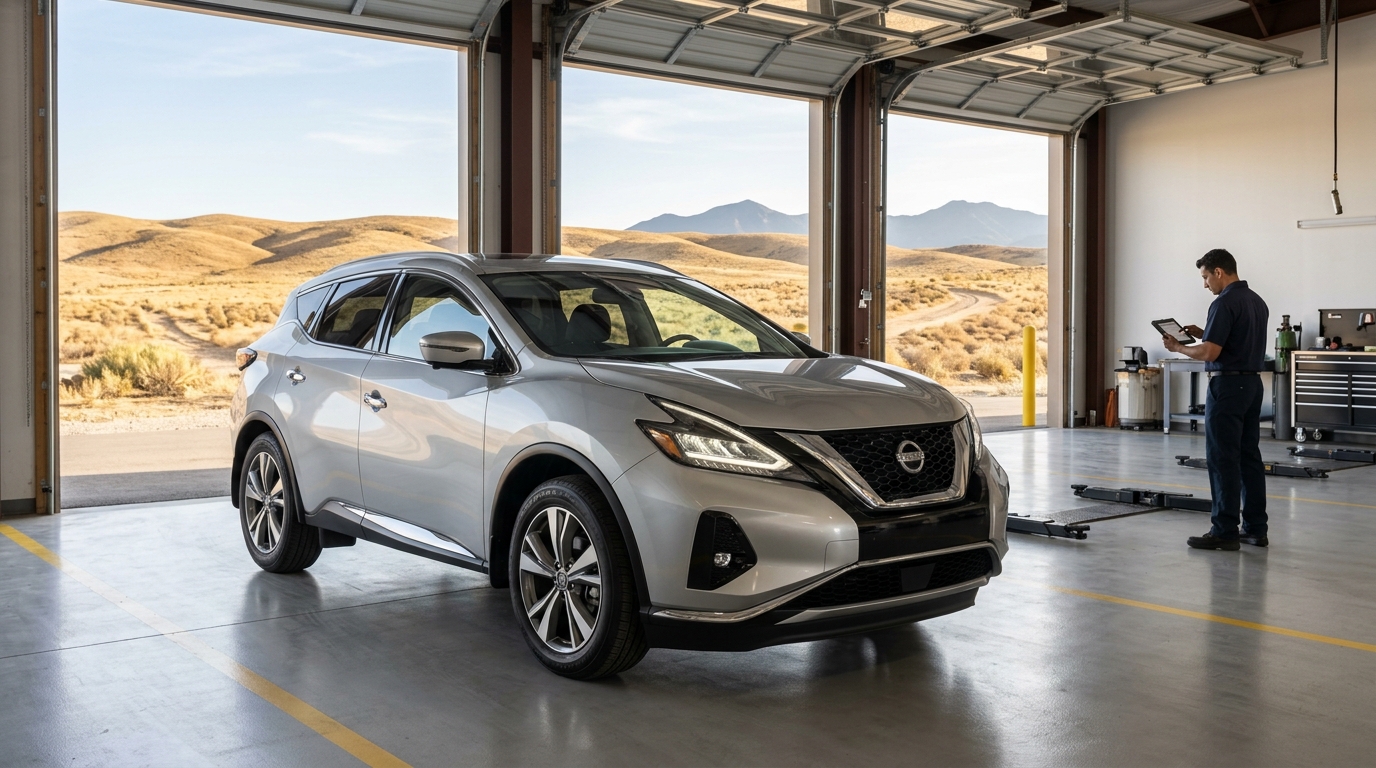
How Do Antelope Valley Temperature Swings Impact Your Nissan in the Fall?
Rapid fall temperature shifts in the high desert directly alter tire pressure, strain battery chemistry, and stress cooling systems as daytime warmth plunges into chilly night air. Preparing your Nissan requires setting cold-tire inflation, testing battery cranking capacity, inspecting engine coolant levels, and replacing air filters loaded with summer dust before seasonal thermal swings create sudden mechanical failures.
As a Service Director at Antelope Valley Nissan with over 10 years of experience, I see firsthand how high desert climate shifts impact local vehicles. During early autumn, afternoon temperatures can reach the upper 80s before dropping into the 40s after sunset. That rapid 40-degree variance causes metal engine components, rubber seals, and vehicle fluids to expand and contract rapidly every 24 hours.
When driver safety and vehicle reliability are on the line, our service team inspects every critical system to handle these thermal swings seamlessly. When local owners bring their vehicles in for a pre-fall check, the question I hear most often in our service bay is how desert dust and sudden temperature drops combine to stress climate control and cooling systems. If you want our factory-trained technicians to perform a comprehensive seasonal inspection, you can drop by our service center location on Auto Center Drive or give our team a quick call at (661) 274-4700 to discuss what your vehicle needs before taking autumn road trips.
Table of Contents
- How Do Rapid Temperature Drops Affect Tire Pressure and Battery Health in Palmdale?
- How Frequently Should Cabin Filters and Engine Coolant Be Serviced in Desert Climates?
- How Does Nissan Intelligent Climate Control Precondition Cabin Comfort During Thermal Shifts?
- What Driving Modes and Towing Precautions Prepare the 2026 Nissan Pathfinder for Desert Terrain?
- Are Clean Vehicle Incentives and Nissan Prepaid Maintenance Available for Fall Upkeep?
How Do Rapid Temperature Drops Affect Tire Pressure and Battery Health in Palmdale?
Ambient temperature drops cause tire pressure to decrease by roughly 1 PSI for every 10-degree Fahrenheit drop in ambient temperature, leading to severe underinflation during cool desert mornings while weakening older battery cells.
According to the National Highway Traffic Safety Administration, checking tire pressure when tires are completely cold gives the most accurate inflation reading. When high desert morning temperatures drop sharply in Palmdale, your vehicle's Tire Pressure Monitoring System warning light often illuminates. Inflating your tires to the exact air pressure listed on the driver-side door-jamb placard prevents uneven tread wear and maintains predictable stopping distances across changing road surfaces.
Battery health is equally vulnerable during high desert temperature swings. Summer heat degrades internal battery plates, but the resulting loss in cranking capacity usually manifests when the first cool morning arrives. Cold engine oil increases starter resistance and requires more electrical amperage to turn over the engine, making a battery weakened by heat wear far more likely to cause a sudden no-start. To prevent unexpected battery failure, drivers can schedule a seasonal service appointment so our technicians can perform a digital battery conductance test and clean corroded terminal connections.
How Frequently Should Cabin Filters and Engine Coolant Be Serviced in Desert Climates?
In dusty high-desert environments, cabin and engine air filters require inspection every 10,000 miles or twice annually, while engine coolant levels should be checked at every oil change interval to prevent thermal breakdown.
While standard factory schedules suggest changing cabin filters every 15,000 to 20,000 miles, airborne sand, fine desert dust, and seasonal pollen clog filter media much faster. Commuters driving past open desert spaces around Lancaster frequently experience restricted HVAC airflow when dust accumulates in the filter pleats. A restricted cabin air filter forces the climate blower motor to pull higher current while blowing fine dust particles into the passenger cabin. Replacing the cabin air filter before fall ensures clean cabin air and optimal heating performance when cold desert evenings set in.
Engine cooling systems also face intense demands during seasonal shifts. Engine coolant neutralizes internal rust and prevents boiling or freezing under heavy thermal load. Per Nissan maintenance guidelines, engine coolant level should be verified when the engine is completely cool to confirm the fluid sits between the MIN and MAX reservoir lines. Nissan specifies a complete coolant replacement at 105,000 miles or 84 months, but early visual inspections catch hair-line radiator hose cracks and pressure cap seal leaks caused by intense summer heat before autumn highway trips.
How Does Nissan Intelligent Climate Control Precondition Cabin Comfort During Thermal Shifts?
Nissan Intelligent Climate Control evaluates outside ambient temperatures upon remote engine start to automatically activate heat, air conditioning, defrosters, heated seats, or a heated steering wheel before you enter the cabin.
When drivers remote start vehicles like the 2026 Nissan Pathfinder or 2026 Nissan Murano using the key fob or MyNISSAN smartphone application, thermal sensors analyze exterior temperatures. If the system detects cold morning air, it engages the cabin heater, front windshield defroster, and seat warmers automatically. Conversely, if afternoon sun spikes interior heat while parked, the system initiates air conditioning to cool the cabin to your preferred setpoint before you open the door.
This preconditioning capability provides distinct efficiency benefits for electric vehicles as well. EV drivers who run preconditioning while connected to a Level 2 home charger draw utility grid power rather than battery power, preserving maximum driving range during cold mornings. Drivers interested in electric vehicle maintenance and battery care can learn more through our Nissan EV learning hub. Keeping these advanced climate systems serviced according to OEM recommendations also protects your vehicle's long-term mechanical reliability, supported by powertrain warranty coverage.
What Driving Modes and Towing Precautions Prepare the 2026 Nissan Pathfinder for Desert Terrain?
The 2026 Nissan Pathfinder utilizes a Drive and Terrain Mode Selector with dedicated Sand, Dirt/Gravel, Snow, Tow, Sport, and Eco settings to optimize wheel traction, throttle response, and torque distribution on desert surfaces.
When navigating loose sand washes or unpaved trailheads, selecting Sand or Dirt/Gravel mode recalibrates the Intelligent AWD system and adjusts engine throttle response to limit wheel spin. For drivers hauling recreational trailers or outdoor equipment, specified configurations of the 2026 Nissan Pathfinder feature a 3.5L V6 engine paired with a 9-speed automatic transmission capable of towing up to 6,000 pounds when properly equipped. Standard Pathfinder configurations provide a towing capacity of up to 3,500 pounds.
Towing heavy loads in high desert environments requires strict operational precautions during thermal shifts. Pulling trailers up steep mountain grades puts additional thermal strain on engine coolant and transmission fluid. Drivers should monitor dashboard fluid temperature gauges, inflate tires to recommended high-load pressures, and inspect trailer wiring harnesses before departure. These identical maintenance principles apply whether you maintain a new SUV or care for a vehicle from our certified pre-owned Nissan inventory.
Are Clean Vehicle Incentives and Nissan Prepaid Maintenance Available for Fall Upkeep?
Nissan offers Nissan Security+Plus Prepaid Maintenance Plans to cover routine oil changes, filter swaps, and seasonal inspections, while federal clean vehicle tax credits for new acquisitions ended on September 30, 2025.
For vehicle owners planning routine fall upkeep, prepaid maintenance plans lock in current service pricing and guarantee that factory-trained technicians install genuine OEM parts. Pre-scheduled service coverage eliminates guesswork from seasonal vehicle care, providing routine tire rotations, fluid top-offs, and comprehensive multi-point inspections at predictable intervals.
Regarding clean vehicle tax incentives, the federal IRC Section 30D clean vehicle tax credit ended on September 30, 2025, under Public Law 119-21. Federal credits are no longer available for present-day vehicle purchases, though state-level programs, local utility rebates, or HOV lane access perks in California may still offer localized benefits. To explore seasonal maintenance packages or schedule a fall safety inspection, visit our service location or speak with our service advisors directly at (661) 274-4700.
© 2026 Antelope Valley Nissan. All rights reserved.